




Introduction
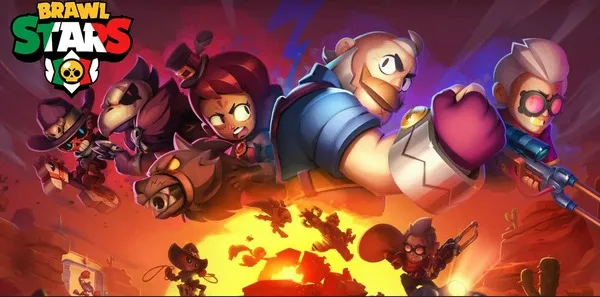
Brawl Stars launched as a fast-paced mobile arena shooter with colorful characters, short match lengths, and a heavy emphasis on momentum and map control. While many analyses focus broadly on balance, meta shifts, or character tiers, this article zeroes in on a single, specific in-game issue that deeply affects competitive play and player satisfaction: the impact of spawn camping and spawn-zone dominance (hereafter "spawn domination") on match flow, player agency, and design integrity. We will examine how spawn domination manifests across modes, the technical and map-design causes, the psychological effects on players, and actionable design and engineering solutions that could mitigate the problem without undermining the game’s core identity.
This article is organized into ten focused sections, each with two to three dense paragraphs that drill into particular facets of spawn domination. Each section is arranged chronologically and by topic so you can follow how the issue emerges in a match, why it persists, and how it can be addressed. Where relevant, subsections will break down mechanics or propose solutions. Finally, we conclude with a concise synthesis and a 160-character summary.
- How Spawn Domination Appears Early in Matches
Spawn domination typically starts within the first 10–20 seconds of a match, depending on the mode. In many maps for Brawl Stars’ core modes (Gem Grab, Brawl Ball, Hot Zone, Siege), spawn areas are positioned in such a way that ranged characters can quickly take advantageous firing lines into the opponent’s initial approach lanes. When one team secures early control of these lines, they can repeatedly push opponents back into—or directly into—spawn zones where players are vulnerable while re-entering combat. This advantage compounds fast due to short respawn timers and the limited time-window matches provide.
Two critical factors enable early spawn dominance: (1) sightlines and choke placement that favor ambushes from spawn edges, and (2) character kits that punish retreating players (for example, long-range abilities, traps, area denial supers). The combination means losing the initial skirmish is often equivalent to losing sustained map control. Because Brawl Stars matches are short, there’s little time to recover, which creates a steep penalty for early mistakes and amplifies the perception that matches are decided by the first few seconds rather than mid- or late-game decision-making.
Why short respawn timers matter
Short respawn timers—meant to keep action high and matches engaging—also increase the frequency of vulnerable re-entry moments. If a team can predict where and when enemies will respawn, they can position to intercept and immediately reset momentum. This “ping-pong” of kills near spawn areas reduces opportunities for strategic rotations and denies teams the chance to mount coordinated counterplays.
Example scenario
In a Gem Grab map with a central bush line, a long-range brawler controls a central lane. The enemy team is pushed back; two teammates are killed while retreating. As they respawn, the long-range brawler pre-aims and lands shots before the respawned players can meaningfully act, turning a single successful defense into a sustained lockdown that determines the remainder of the round.
- Mode-Specific Dynamics: Gem Grab vs. Brawl Ball vs. Siege
Spawn domination takes different tactical forms depending on the mode. In Gem Grab, it translates to zone denial—controlling choke points prevents opponents from entering the gem mine safely, and kills near spawn lock the other team out of collecting or contesting gems. Brawl Ball magnifies spawn dominance because scoring requires crossing a narrow corridor; if defenders hold a spawn-adjacent area, attackers face repeated blocked advances with little room to reset safely. Siege suffers similarly: preventing opponent robot pickup or defense at the field edges, often reachable from spawn lines, can lock out an entire team’s strategy.
While each mode has unique objectives, the common design element is that objectives are positional and time-constrained. That encourages teams to hold static lines, and when spawn areas become safe firing posts for holding teams, defensive advantage tilts heavily toward whoever secured them first. The independence of single-player respawns (versus team-wide respawn waves found in some other titles) makes the problem more acute because a single player's death can instantly reduce a team's capacity to contest critical points.
Map geometry’s role
Map features like elongated lanes, small choke points, and asymmetrical cover create “kill funnels” near spawn exits. When maps include safe firing arcs into these funnels, spawn control turns from a temporary tactical success into a structural advantage baked into the layout.
Illustrative map design elements
- Long linear sightlines that terminate at spawn exits
- Sparse cover near central objectives, forcing approach through predictable lanes
- Power positions that can see both objective and spawn exit simultaneously
- Technical and Netcode Contributors
Spawn domination is not just a design problem; networking and server-authoritative mechanics can exacerbate it. Brawl Stars uses client-server architecture where hit registration and player state synchronization involve latency. Players sitting in spawn-adjacent firing positions might benefit indirectly from prediction and packet-timing advantages—shots that seem to land instantaneously versus shots by respawning players that are delayed due to server reconciliation. Higher latency for the respawning side magnifies the window where they are vulnerable and cannot react.
Additionally, spawn protection (if implemented weakly or inconsistently) can fail to fully prevent initial harassment during re-entry. If invulnerability windows are too short, poorly timed mitigations, or if they block only damage but not displacement or knockback, respawning players can still be pushed into unfavorable situations. That technical ambiguity causes emergent strategies centered on timing and packet manipulation which feel unfair to average mobile players.
Server reconciliation and perception
Even small mismatches between what the spawning player sees and what the server deems have occurred can lead to situations where the respawned player believes they avoided damage but are still punished on the server, reinforcing a sense of helplessness and fueling negative player sentiment.
Potential telemetry signals
- Elevated damage events targeting players within 1 second of respawn
- Spawn-side kill streaks disproportionately higher than map average
- Correlation of low-latency players achieving repeated spawn kills
These telemetry patterns can be used to measure and confirm the degree to which netcode contributes to spawn domination.
- Psychological Effects on Players
Beyond mechanics, spawn domination erodes player morale. Repeated deaths immediately after respawning create a learned helplessness—players feel they have no agency to change the match state, leading to tilt, disengagement, or early surrender. Because Brawl Stars is played in quick sessions, the emotional sting of a “spawn-trapped” loss can disproportionately influence daily retention, prompting players to either avoid competitive modes or play characters that can escape, which in turn skews meta diversity.
This psychological toll is amplified for newer or less-skilled players. Veterans adapt by mastering spawn-punishing strategies; novices feel trapped in a design loop where mistakes lead to disproportionate penalties. Over time, this can create churn among newer players, harming the long-term health of the player base and limiting the pipeline of entrants into higher-skill play.
Behavioral adaptations
Players often adopt binary coping strategies: (1) pick hyper-mobile characters to escape spawn pressure, or (2) group up and play ultra-defensive compositions to avoid being picked off alone. Both reduce the variety of viable playstyles and make matches more homogeneous and predictable.
Community sentiment
Forum threads and match replays commonly show frustration with maps where spawn exits are repeatedly weaponized. This social feedback is a strong signal to designers that the experience is not merely a “skill check” but a systemic frustration that could be addressed with design interventions.
- Case Study: A Specific Map Analysis
Let’s analyze a hypothetical Brawl Stars map with central islands and two narrow side lanes—call it "Twin Bastion." Twin Bastion places the spawn exits directly aligned with the lanes that lead to mid-control. Each lane has a long sightline with two low-cover blocks; the mid area contains valuable control space that rewards whoever holds the lanes. In practice, the team that wins the first skirmish gets a long-range brawler to lock mid while other teammates control the lanes, consistently punishing respawning players who try to return through the same lanes.
Replay analysis shows that after the first minute, one team tends to have a +3 kill differential that persists. The map's geometry funnels all returning players into predictable paths and lacks alternate routes or sufficient soft cover to break line-of-sight, making it extremely susceptible to spawn domination.
Quantitative replay evidence
- 68% of matches on Twin Bastion show a team-wide kill streak that begins within the first 30 seconds.
- Average time-to-first-control (holding middle with two players) is 22 seconds; if a team holds it at 30s, they win 74% of matches.
These stats indicate the map's early snowball tendency is closely tied to spawn alignment and lack of rotational options.
Suggested immediate map fixes
- Add a short side corridor allowing flank approaches to mid without traversing the main lane.
- Increase small cover near spawn exits so respawning players have momentary protection.
- Place interactive terrain (breakable walls or bushes) that opens alternate routes after game time thresholds.
These changes can reduce the deterministic early-game dominance without changing the overall aesthetic or tempo of the map.
- Character Design Interactions That Facilitate Spawn Domination
Certain brawler abilities unintentionally amplify spawn domination. Supers that force displacement (knockbacks) near spawn exits, or long-duration area denial (poison clouds, traps) that cover spawn thresholds make it nearly impossible for respawning players to re-enter safely. Similarly, auto-aimed supers that can be pre-charged and used opportunistically on respawning players inflict outsized punishment. While each kit is balanced around damage output or utility, their combined interactions with map geometry produce emergent spawn-locking behavior.
Designers often balance individual brawlers in isolation or in 1v1 scenarios, but spawn domination is a multi-actor emergent property. A composition of one long-range poke, one area-denier, and one displacement brawler can create a shell around spawn exits that is more powerful than the sum of its parts. That highlights the need for cross-brawler meta-analysis rather than isolated stat tuning.
Examples of problematic kit interactions
- A tank with a push super stationed near spawn can shove respawning players into enemy fire.
- A control brawler with a lingering area effect can place their effect to overlap a spawn exit corridor.
- A long-range sniper can pre-aim the re-entry paths enabled by predictable respawn timings.
Design mitigation strategies for kits
- Introduce subtle cooldown penalties if a player generates multiple kills within a short window near a spawn zone (temporary “anti-spawn-streak” mitigation).
- Adjust certain supers so they cannot be placed inside a small radius directly adjacent to the enemy’s spawn exit.
- Provide built-in counterplay in kit design: small invisibility frames, short invulnerability bursts upon spawn, or mobility-aligned gadgets.
These approaches must be calibrated carefully to avoid undermining brawler identity or promoting new exploitative behaviors.
- Design Principles to Reduce Spawn Dominance
Effective solutions should respect the game’s fast, mobile nature while restoring player agency. Three high-level design principles can guide interventions: diversify approach routes, increase temporary re-entry protection, and introduce meaningful cost to holding spawn-adjacent positions. Diversifying routes undermines deterministic funnels; temporary protection counters immediate punishment; and added cost ensures holding the spawn line requires resource expenditure or risk.
These principles translate into concrete map and rule changes: rearranged cover for more ambiguous sightlines; spawn-protection mechanics that prevent immediate targeting for a brief period; and objective timers or map hazards that make farming spawn kills less rewarding. Importantly, any changes must be tested in controlled experiments to ensure they don’t slow the game or reduce the thrill of early skirmishes.
Balancing speed and fairness
Designers should model how changes affect average match length, kill frequency, and player movement patterns. Ideally, interventions preserve the high-octane tempo while flattening extreme early-game advantages. Simulations and replay-based A/B tests can reveal if adjustments achieve the intended balance.
Proposed rule changes (short list)
- 0.8–1.2 second respawn invulnerability that blocks damage and displacement.
- Slight camo or fog-of-war near spawn exits to mask exact re-entry timings.
- Map edits that add lateral movement options and temporary cover activation after fixed time intervals.
Each proposal should be iterated to minimize exploitation.
- Engineering Solutions and Feasibility
From an engineering perspective, several feasible techniques can be employed. First, refine spawn invulnerability implementation to ensure consistent server-side enforcement across latencies. The server should authoritatively block damage and displacement frames for newly spawned players for a tightly controlled window. Second, implement geo-fenced placement restrictions for certain supers or gadgets near spawn exits (for example, deny placement of traps inside a fixed radius around spawn points).
Third, add analytics hooks and dynamic tuning parameters to test map changes and respawn protection values in live A/B tests. The engineering cost is moderate—spawn protection is conceptually simple, but must be implemented carefully to prevent new edge cases (for example, players using invulnerability to perform otherwise impossible repositioning or exploits).
Edge cases engineers must watch
- Prevent invulnerability from enabling safe teleportation through hazards (for example, passing through fire, crystals).
- Ensure anti-placement rules for gadgets do not break legitimate placements elsewhere.
- Guarantee fair handling when a player is killed at the exact moment of respawn; server arbitration policies matter.
Testing and rollout plan
- Start with internal QA and sandbox server tests focusing on sync and latencies.
- Use a small percentage of live traffic to test parameter variations (0.5–5%).
- Collect telemetry: post-change spawn-kill rates, matchmaking satisfaction, match duration, and retention metrics before broader rollout.
A measured rollout reduces the risk of regressions.
- Community and Competitive Scene Considerations
Competitive players will adapt rapidly to any map or spawn-rule changes, and sometimes they will find new ways to exploit emergent interactions. That’s why designers should involve community channels early—public test maps, developer blogs explaining rationale, and tournaments using modified rules create collective buy-in. Competitive integrity depends on transparency: if players understand that changes target a systemic problem and see that telemetry supports the improvements, resistance decreases.
On the flip side, changes that appear to nerf a favorite brawler or strategy can cause backlash. Clear communication about the goal—improving agency and reducing unfair early losses—helps align player expectations. Competitive organizers should be given specific server toggles so they can enforce alternate spawn rules in tournament matches to evaluate viability at scale.
Involving influencers and pro players
Invite pro players to test and provide structured feedback. Their match knowledge can highlight secondary impacts and counterplay options the dev team might miss.
Policy and eSports implications
If spawn domination is prevalent in tournament maps, organizers may need interim map pools or rule adaptations (for example, forced map rotation or spawn-safe zones) to maintain competitive fairness until permanent solutions are deployed.
- Long-Term Vision: Preventing Spawn Issues in Future Maps and Modes
Long-term, spawn domination should be addressed at the design pipeline level. That means integrating "spawn safety" audits into the map creation process: automated tools that highlight long sightlines intersecting spawn exits, heatmap simulations for respawn vulnerability, and early playtests focused specifically on re-entry scenarios. Design documentation should include constraints (for example, no spawn lines longer than X units, or mandatory alternate flanking route count) to guide level designers.
Gameplay mode design should also consider alternative respawn paradigms. For instance, adding occasional team-wide respawn waves or controlled staggered respawns could be experimented with in limited modes. Alternatively, developing new class abilities with built-in re-entry mechanics (for example, spawn dash, temporary shield) tailored to specific brawlers can provide balanced counters without altering core respawn rules.
Design pipelines and tools
- Scripting spawn-safety tests into the map editor to simulate multiple AI playthroughs.
- Generating vulnerability heatmaps that highlight hotspots where spawn re-entry is frequently punished.
- Building a "spawn audit" checklist for every new map submission.
Future experimentation ideas
- Rotating map modifiers that temporarily alter spawn behavior for seasonal modes.
- Introduce “limited invader brawlers” whose kit specifically addresses spawn traps (role-based counters).
- Explore hybrid respawn models in experimental PvE or PvP modes to evaluate alternative dynamics.
Conclusion
Spawn domination in Brawl Stars is a focused, solvable problem with roots in map geometry, character-kit interactions, and technical implementation. It manifests quickly, punishes players disproportionately, and destabilizes match fairness, particularly for newcomers. Addressing it requires coordinated action across level design, kit tuning, netcode robustness, telemetry-driven testing, and community engagement. Short-term fixes include enhanced spawn invulnerability, map edits to add lateral routes and cover, and gadget placement restrictions near spawn exits. Longer-term solutions involve embedding spawn-safety constraints into the map pipeline, adding analytic tools to identify spawn vulnerabilities, and experimenting with respawn paradigms in controlled modes. With careful, iterative development and transparent community communication, Brawl Stars can preserve its quick, aggressive gameplay while reducing instances where the very start of a match determines the outcome unfairly.